PCOS has a new name? Introducing “PMOS”
Polycystic Ovarian Syndrome (PCOS) is getting a long-overdue name change. Everyone, please welcome…
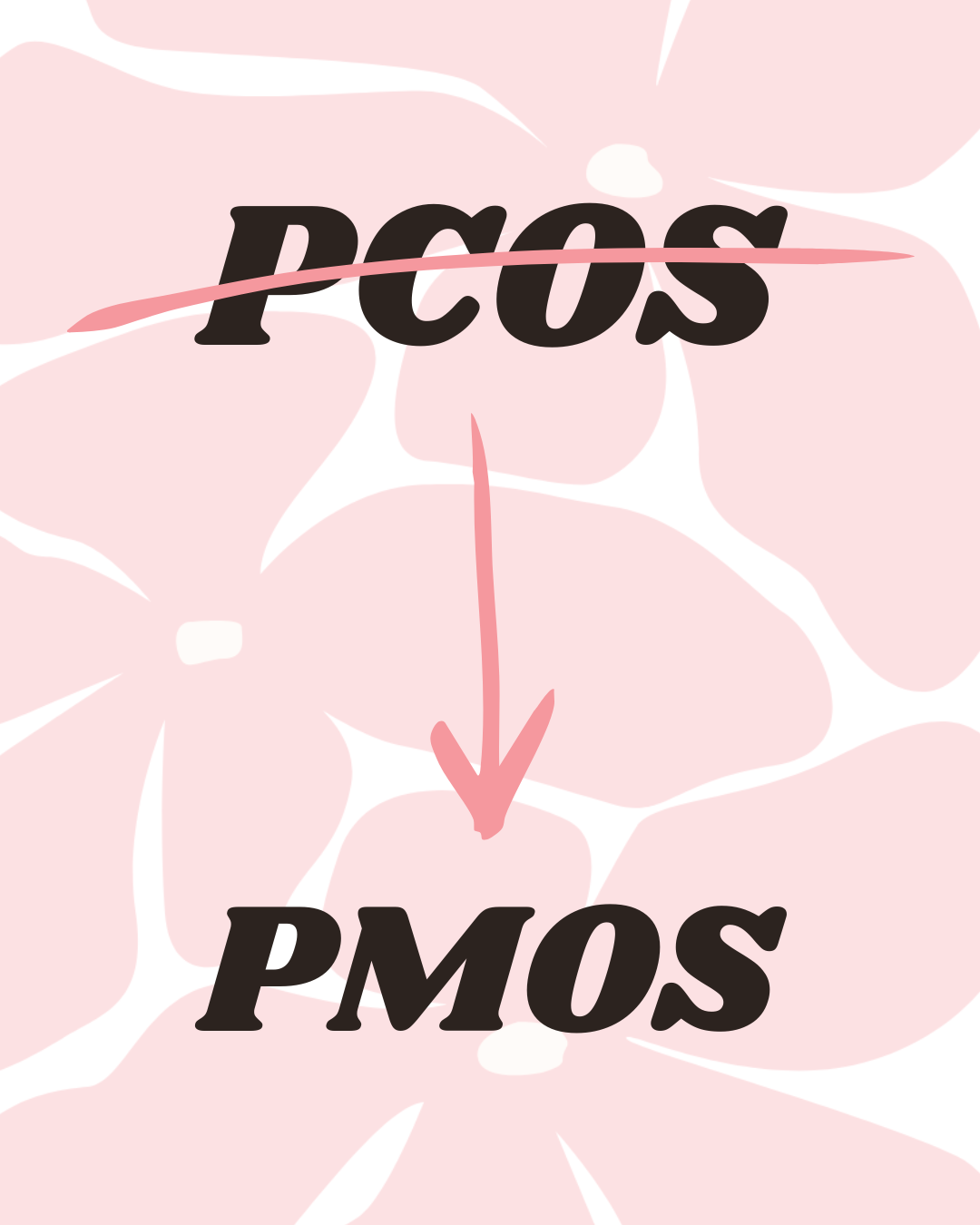
“Polyendocrine Metabolic Ovarian Syndrome” (PMOS)
Why is the name changing?
Put simply, the name “PCOS” didn’t quite capture the whole condition. For one, the name “PCOS” implies that the defining feature of this condition is cysts on the ovaries (i.e. “poly-cystic”). But here's the thing: those "cysts" are not actually true cysts at all, they are ovarian follicles that have simply stopped growing. And some people with PCOS don't even show evidence of these follicles on ultrasound.
If you’ve read my previous blogs, or seen me talk on social media or present at an event, you’d know that PCOS is often rooted in metabolic dysfunction. The name “PCOS” doesn’t account for the metabolic issues that are often at the heart of the condition.
💡 Did you know that PCOS cannot be diagnose by an ultrasound alone? This is because multiple follicles are a presentation of many conditions, not just PCOS/PMOS.
💡 Did you know that having an “ovarian cyst” is a completely different situation than having “Polycystic Ovarian Syndrome” 🤯. They require completely different treatments.
A lot of folk are on board with the name change, too. It turns out that 86% of surveyed patients and 71% of healthcare professionals supported adopting a name. This you something about how long people have felt let down by the old one!
Does the name really matter?
Yes, an accurate name matters. It changes how health professionals investigate your health, how you understand your condition, how you self-advocate, and, ultimately, what gets taken seriously.
When a name can truly reflect what the condition is, it allows for accurate treatment.
What does PMOS actually mean?
The new name -polyendocrine metabolic ovarian syndrome- tells a fuller story:
Polyendocrine → multiple hormone systems are involved, not just reproductive ones
Metabolic → the metabolic dimension (insulin resistance, blood sugar regulation, cardiovascular risk) is finally front and centre
Ovarian → the ovaries still play a role, but they're not the whole picture
PMOS is now recognised as a complex, multisystem condition involving endocrine, metabolic, reproductive, dermatological, and psychological health. This is far more consistent with what people experience, in real life.
What are PMOS symptoms?
Polyendocrine Metabolic Ovarian Syndrome? More like Piss Me Off Syndrome!
Yes, unfortunately the symptoms of PCOS/PMOS can generate frustration! Because PMOS is a multisystem condition, symptoms vary widely between individuals. Common PMOS symptoms include:
Irregular or missing periods (If yours have gone MIA -read this)
Excess androgens (male hormones, such as Testosterone) - presenting as acne, excess facial hair, or hair thinning. Read Natural Treatments for Hormonal Acne.
Insulin resistance and blood sugar dysregulation
Weight gain - particularly around your midsection - or difficulty losing weight
Fatigue and low energy
Mood changes, anxiety, and depression
Fertility challenges
Cardiovascular and metabolic disease risk
Natural Treatment for PCOS/PMOS
Naturopathic treatment for PCOS - now PMOS - has always addressed the metabolic, endocrine and psychosocial picture. Blood sugar regulation, inflammation, stress response, gut health, sleep, mental well-being…. These are the foundations of a naturopathic approach to PMOS, and evidence has been pointing this way for years. The rename doesn't change what good integrative and naturopathic care looks like. It just means the language finally reflects it.
Every person’s PMOS picture looks different. Therefore, every persons Naturopathic Treament Plan is different. This is why identifying your individual driver matters. Read: The Four Drivers of PCOS/PMOS and Natural Treatments.
💡 PMOS disrupts the hormonal dance of the menstrual cycle at a fundamental level. If you want to understand what a healthy cycle looks like, read this.
The name change isn't a cure for the lack of medical treatment options available, but it is step toward being taken seriously.
If you want to understand your own PMOS picture - the metabolic drivers, the hormonal patterns, what nutrition and lifestyle can actually support - that's exactly what I work with in clinic. Click below to book in a free 15 minute discovery session with me.
— Tayla
FAQ about PMOS
What is the new name for PCOS?
PCOS is officially being renamed to “PMOS'“, which stands for polyendocrine metabolic ovarian syndrome. The name change was published in The Lancet in May 2026 following a decade-long global consensus process involving clinicians, researchers, and patients. Both “PCOS” and “PMOS” will be used interchangeably during a three-year transition period, with PMOS expected to be adopted in international disease classification systems by 2028.
Is PCOS and PMOS the same condition?
Yes. PMOS is the new name for PCOS. The condition itself hasn't changed. Only the name has changed, to better reflect the full hormonal, metabolic, and systemic nature of the syndrome.
Do I need a new diagnosis if PCOS is now called PMOS?
No. If you've been diagnosed with PCOS, your diagnosis remains valid. The renaming doesn't require any new testing or paperwork. This is a terminology update, not a new condition. If you suspect you may have been misdiagnosed, then it is worth checking in with your Doctor.
What are the symptoms of PMOS?
PMOS symptoms include irregular or absent periods, excess androgens (causing acne, facial hair, or hair thinning), insulin resistance, weight changes, fatigue, mood disturbances, and fertility challenges. Because PMOS affects multiple body systems, symptoms vary significantly between individuals.
Can a naturopath help with PMOS?
Yes. Naturopathic treatment for PMOS focuses on the underlying metabolic and hormonal drivers of the condition, including insulin resistance, inflammation, gut health, and stress. Registered Naturopaths use evidence-based nutrition and lifestyle interventions. If you're in Aotearoa New Zealand and looking for naturopathic support for PCOS/PMOS, get in touch here.
References:
Teede, H. J., Khomami, M. B., Morman, R., Laven, J. S. E., Joham, A. E., Costello, M. F., Patil, M., Rees, D. A., Berry, L., Cree, M. G., Zhao, H., Norman, R. J., Dokras, A., Piltonen, T., & Global Name Change Consortium (2026). Polyendocrine metabolic ovarian syndrome, the new name for polycystic ovary syndrome: a multistep global consensus process. Lancet (London, England), S0140-6736(26)00717-8. Advance online publication. https://doi.org/10.1016/S0140-6736(26)00717-8